
 Eng
EngProduction line – production lines
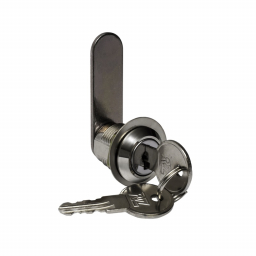
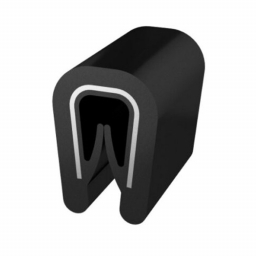
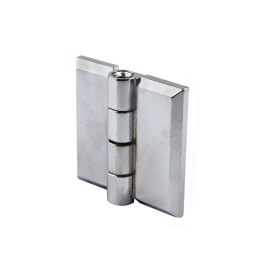
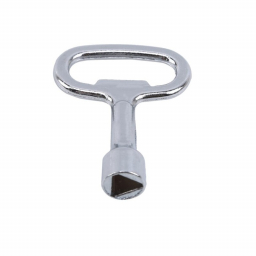
A production line is a complex of interconnected equipment, automated systems and auxiliary units organised for the sequential performance of operations for the manufacture, processing, assembly or packaging of products within a single production cycle. Such a line may include machine tools, conveyors, robotic modules, control systems, automation cabinets, sensors, and actuators. All components are synchronised with each other and operate according to a specified technological scheme — from loading raw materials to releasing the finished product.
Types of production lines and their industry-specific features
Process lines can be either fully automated (with minimal human involvement) or semi-automated, where the operator performs control or adjustment functions. They are found in virtually all industries where stable, repeatable and controllable operations are required. Therefore, there are differences between lines in terms of both the type of automation and the industry.
Food production: beverage filling lines, packaging lines, pasteurisation systems, meat and meat product production, confectionery, pasta, bakery products, baker's yeast.
Pharmaceuticals: drug production and packaging lines, sterilisation modules, cleanliness and microclimate control systems.
Mechanical engineering and metalworking: assembly lines, CNC machines as part of complexes, metal bending and cutting lines, drying of products after painting.
Chemical and petrochemical industry: dosing units, reactor units, pumping and filtration lines.
Agriculture: lines for processing and preserving agricultural products; lines for cleaning, drying, processing and packaging grain and legumes.
Energy: automated metering and distribution points, pumping systems.
Housing and utilities: cleaning and water treatment systems, heat and water supply and distribution.
Light industry: sewing and cutting complexes, dyeing and heat setting lines.
Where exactly is hardware used in technological lines?
In each of the above areas, control and monitoring units are housed in separate metal enclosures and panels, on which industrial fittings are mounted. At the same time, it is not only a functional working element, but also a safety component.
In production technological lines, industrial hardware is installed on such objects:
- control cabinets - for access to controllers or touch panels, relay assemblies;
- sensor and measuring unit enclosures (often in high humidity or dusty conditions);
- cooling and ventilation modules for process equipment;
- emergency shutdown panels and backup power supply units;
- compressor units, electric generators and other auxiliary line units.
Even if the line is completely enclosed by a cover, fittings are necessary for scheduled maintenance and rapid intervention in the event of malfunctions.
Requirements for hardware: an industry-specific approach
Not all fittings are suitable for all conditions. For example:
The food and pharmaceutical industries require materials that are resistant to aggressive cleaning agents, moisture and frequent disinfection. Here, AISI 304/316 stainless steel, FDA-certified polymers and fittings with IP66–IP69K protection are used.
The chemical industry is a corrosive environment. Here, preference is given to coatings with increased chemical resistance (e.g. powder coatings of class C5-M according to ISO 12944) and seals made of EPDM or fluororubber.
Mechanical engineering and heavy industry — shock and vibration loads are common here. Therefore, mechanical strength, anti-vandalism solutions and locks with protection against unauthorised access are important.
Energy and housing and communal services — equipment is often located in open areas, subject to temperature fluctuations and atmospheric phenomena. Therefore, the key parameters are a temperature range from –40°C to +85°C, IP65 protection and above, as well as resistance to UV radiation.
How to choose the right hardware in B2B
When choosing hardware for technological lines, you should focus not on appearance, but on technical requirements and operating conditions of the equipment. We recommend paying attention to the following indicators.
- The material of the product body or seal. Consider the aggressiveness of the environment, humidity, and temperature.
- IP protection rating. Check whether it corresponds to the environment in which the product will be used (inside a workshop, outdoors, in a washing area, exposed to chemical reagents, etc.).
- Compatibility with mounting standards. Industrial cabinets, depending on their type, must comply with certain specifications regarding dimensions, metal thickness, size and location of mounting holes, and type of fasteners. There are common standards for products from well-known global manufacturers. However, many machine-building companies also develop their own standards and mounting schemes. This point is very important when selecting the appropriate fittings.
- Lock type and security level. Depending on access requirements, simple latches, key locks, combination locks, or electromechanical systems are selected.
- Certification. This is especially important for the food and pharmaceutical industries and for potentially explosive atmospheres (ATEX, IECEx).
What solutions does the RZ-market online store offer for equipping production lines?
We offer the following products.
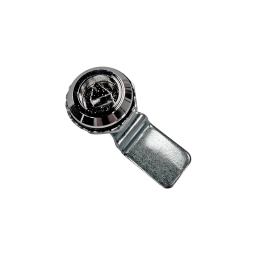
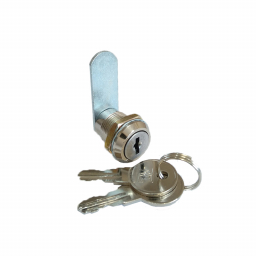
• Locks for metal cabinets and boxes
• Keys
Accessories for metal cabinets
If you cannot find the products you need on the website, please contact our manager. They will either select similar products from our existing range or accept your request for a custom order. We organise fast delivery throughout Europe.


